
Kandersteg · Independent guide
Kandersteg Via Ferrata: Allmenalp Planning Guide
Travel facts checked
Assess the Allmenalp fixed climb by its grade, gear needs and current access. Plan the approach and descent as one outing.
In this guide9
The Kandersteg via ferrata at Allmenalp is a hard fixed climbing route. It rises above the valley. It is a different trip from Oeschinen Lake. It has its own access point and gear needs.
Choose it for the climb itself. Do not add it as a casual extra after a lake walk.
Fixed cables, ladders and bridges do not make it a beginner stroll. Judge your skills for the grade and height. Plan the way down too.
Allmenalp is for skilled via ferrata users. It has exposed climbing rated K4, with key points at K4–5. Check that both the route and cable car are open. Carry the full required gear and plan the way down. If your skills do not fit, choose another outing or a guide whose trip fits you. Fixed cables do not prove that a route is easy or open.
Kandersteg via ferrata: what Allmenalp involves
The national tourism route page was checked on 14 October 2026. It describes a rock face about 350 metres high. The climb has waterfall sections, rope bridges and an overhang.
The page rates the route K4, with key points at K4–5. It says the route is not for beginners.
That grade describes hard climbing and exposure to steep drops. It is not a stroll beside a waterfall. Parts of the route are vertical and need awkward moves. Fitness for long walks alone does not prove climbing skill.
The tourism source gives a total height gain of about 550 metres. About 350 metres are on the fixed climb. It gives a time estimate of three to three and a half hours.
Add your own approach and time to put on the gear. Include rests and the way down. A quoted estimate is not a promise about your pace.
Read the village guide to keep Allmenalp separate from the lake lift. Tickets and meeting points for one mountain area should never be assumed to apply to the other.
Who the route suits
Choose the route when you have used gear on exposed fixed climbs. Judge the whole group. One skilled climber cannot remove someone else's fear of heights. Each person needs the skills for the trip.
Know how to use a harness and an energy-absorbing lanyard. The lanyard is part of the via ferrata set. Do not use this hard route to learn alone.
Choose instruction that fits your skill level before the climb. You can also choose a different outing.
A guide booking should state the skills you need. It should say what gear is supplied. A guide does not make every hard route fit every person.
Check age and fitness limits before paying. Check gear and weather rules too. Read the terms for changing or cancelling the trip.
Give non-climbers their own plan. Do not expect them to walk the fixed climb. The valley and lake have other choices. Agree where to meet and how each person will get back.
Kandersteg via ferrata equipment
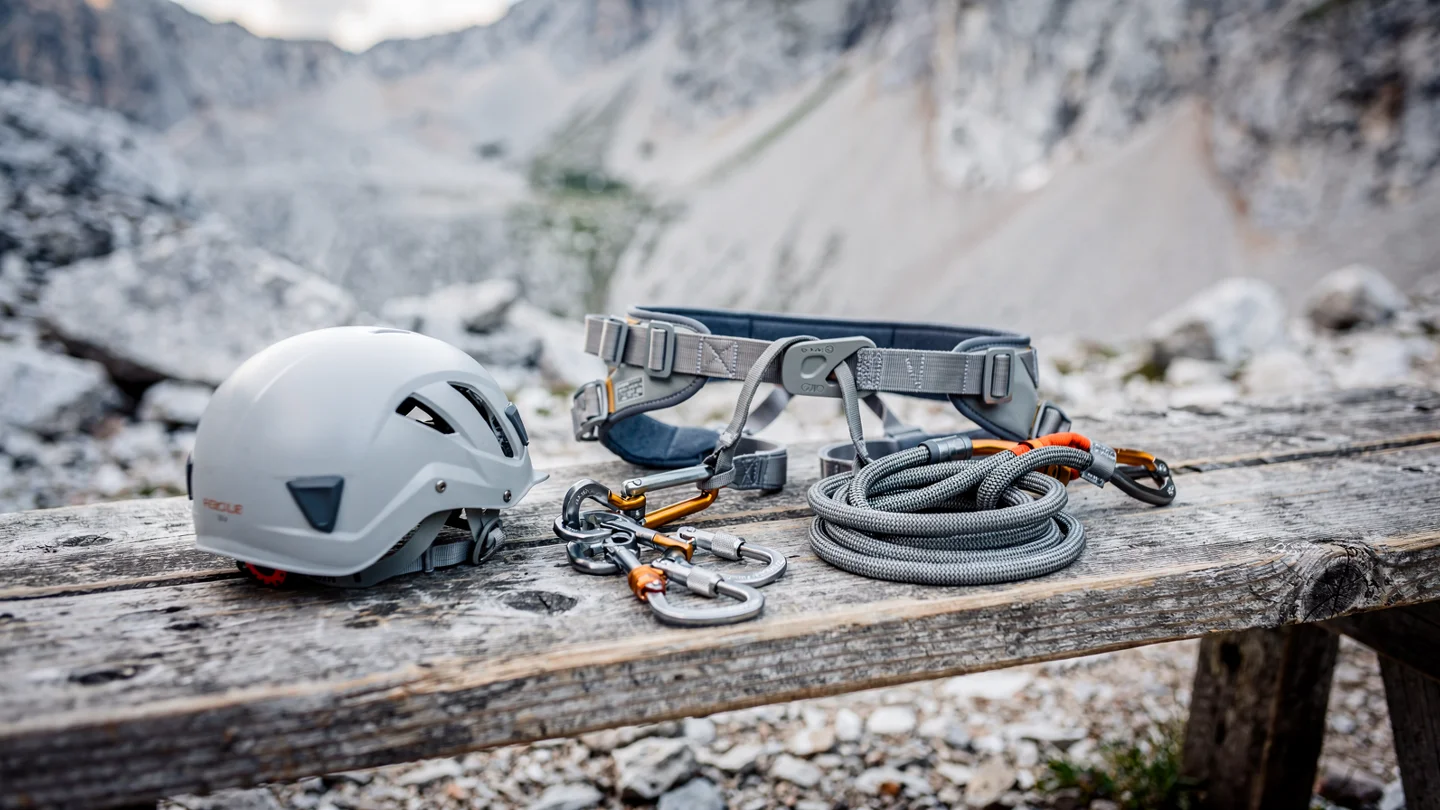
The published route requirements call for a helmet and harness, plus a via ferrata set. Use the correct gear, in sound condition and fitted to you. A plain rope is not a substitute. Do not improvise a tether to replace the required set.
Wear shoes with grip for the path and climb. Carry enough food and water, plus layers for the whole outing. Pack so that loose items do not interfere with movement, and keep the phone or camera secure.
If hiring gear, confirm the exact items and sizes, plus collection and return hours. The route cannot begin earlier than the gear is available. A rental listing does not prove that gear is in stock. Confirm your sizes before setting the day's timing around them.
Learn to use the actual gear before the trip. Read its maker's current instructions. This page does not certify your gear or teach its use. Get the skills before entering exposed ground.
Approach and exit planning
The tourism page puts the start southwest of the village. It is near the lower Allmenalp cable-car station. The stated approach from the railway takes about 20 minutes. The entrance is around 1,250 metres.
Use the current mapped path. An old set of street names may miss a changed route.
The route page places the exit near 1,600 metres. You still walk towards the upper station at about 1,723 metres. Finishing the climb does not put you at the descent lift. Keep time and energy for that last section.
The cable-car descent is one option in the tourism guidance. Check its date-specific service and final ride before starting. If you plan to walk down, check that route too. Allow for its condition and the extra effort after the climb.
Do not decide the way down only after you finish. A missed service or a closed footpath can make the return much harder. Set an earlier start and a return margin rather than relying on the fastest quoted pace.
Season and current conditions
The route page gives a usual season from early June to mid-October. It links the season to cable-car service. That is not live proof that the climb is open today. Check the current notice for your date.
Check the Allmenalp operating information before the outing and confirm the route status separately. If access is unclear, confirm it before starting. An old map or route review is not enough.
Wet rock and storms, or remaining snow can affect a fixed route. Do not start solely because the valley looks clear. Let the actual mountain conditions change your plan. Obey closures and staff instructions at the start.
Near the end of the stated season, the date deserves extra care. Service and path conditions may differ from peak summer. A general “open in October” phrase does not prove that your chosen day is available.
The extra zipline is a separate choice
The tourism source describes an extra 110-metre tyrolienne, or zipline. It says that this feature needs a mountain guide. Do not assume a self-guided route includes it. Check the exact trip if that feature is your aim.
Keep optional variants out of the plan until their access and requirements are clear. A video does not give permission to use an extra feature. It also does not show what is available now. The core climb already has demanding sections.
Build a day around the climb
Give Allmenalp its own weather and timing plan. Adding a high lake hike on the same day adds more travel. It adds effort and several lift deadlines too. Starting in the same village does not make both fit one day.
Staying in the valley may let you start after confirming conditions and collecting gear. Compare the Kandersteg stay arrangements around that need, including breakfast and parking, plus the rate terms. More time can help; it does not replace skill or safe conditions.
Carry food so that your route does not depend on a kitchen being open at the end. Plan a realistic meal after the descent, and leave room for returning any hired equipment first.
Climb questions
Is Allmenalp suitable for a first via ferrata?
The checked tourism guidance says it is not suitable for beginners and gives K4 with key sections at K4–5. Choose a route or instructional arrangement that fits your actual experience. Being comfortable on ordinary hikes is not the same as knowing how to move and use equipment on exposed fixed terrain.
Is the route open whenever the cable car runs?
Do not infer that from lift operation alone. Confirm route access and mountain conditions for your date as well as the service you need for the return. A general seasonal description is not a live opening notice, especially near the start or end of the climbing season.
Can I do the extra tyrolienne independently?
The tourism source states that its described 110-metre extra requires a mountain guide. Check the actual arrangement and prerequisites before including it in your plan. Do not use an old video or another person's route log as permission to attempt an optional feature yourself.
Kandersteg via ferrata verdict
The Kandersteg via ferrata at Allmenalp belongs in a prepared climbing itinerary. Match the difficulty to your experience, confirm current access, arrange the required gear and protect the descent. For an easier lake day, choose the Oeschinen walking paths. Do not treat this climb as a short detour.